Welcome
We develop novel numerical methods and apply them to solve challenging fluid flow problems in various areas of science, engineering, and medicine. We are particularly interested in theoretical aspects of high-order numerical methods for unstructured grids, as well as their implementation for a range of modern hardware platforms.
News
Recent Papers
Computational and Experimental Comparison of CLF5605 and roamx-0201 Martian Helicopter Rotor Airfoils. L. Caros, W. J. F. Koning, T. Nagata, K. Asai, O. Buxton, N. Perez Perez, E. A. Romander, T. Nonomura, H. V. Cummings, P. E. Vincent. Submitted for publication in AIAA Journal.
Abstract: This study compares aerodynamic performance of the CLF5605 rotor airfoil - which flew on Ingenuity from 2021 to 2024 - with that of a new optimized roamx-0201 airfoil designed for Martian conditions at NASA Ames. Specifically, performance is studied at a Reynolds number of 20,000 and a Mach number of 0.60, across a range of angles of attack, using three independent state-of-the-art methodologies: implicit large eddy simulations (ILES) using NASA's OVERFLOW solver, direct numerical simulations (DNS) using the high-order GPU-accelerated PyFR solver, and experimental testing in the Mars Wind Tunnel at Tohoku University. Discrepancies between results obtain using the various methodologies are analyzed and explained. Across all methodologies it can be seen that the roamx-0201 airfoil is able to achieve a given lift with less drag compared to the CLF5605 airfoil. Moreover, OVERFLOW and PyFR results show that the roamx-0201 airfoil has superior stall characteristics, and can achieve a maximum lift ~20% higher than that achieved by the CLF5605 airfoil. The work provides a strong body of evidence to support further studies into use of rotors based on the optimized roamx-0201 airfoil for future Mars helicopter missions.
Link:
Link:
PyFR v2.0.3: Towards Industrial Adoption of Scale-Resolving Simulations. F. D. Witherden, P. E. Vincent, W. Trojak, Y. Abe, A. Akbarzadeh, S. Akkurt, M. Alhawwary, L. Caros, T. Dzanic, G. Giangaspero, A. S. Iyer, A. Jameson, M. Koch, N. Loppi, S. Mishra, R. Modi, G. Saez-Mischlich, J. S. Park, B. C. Vermeire, L. Wang. Computer Physics Communications, Volume 311, 2025.
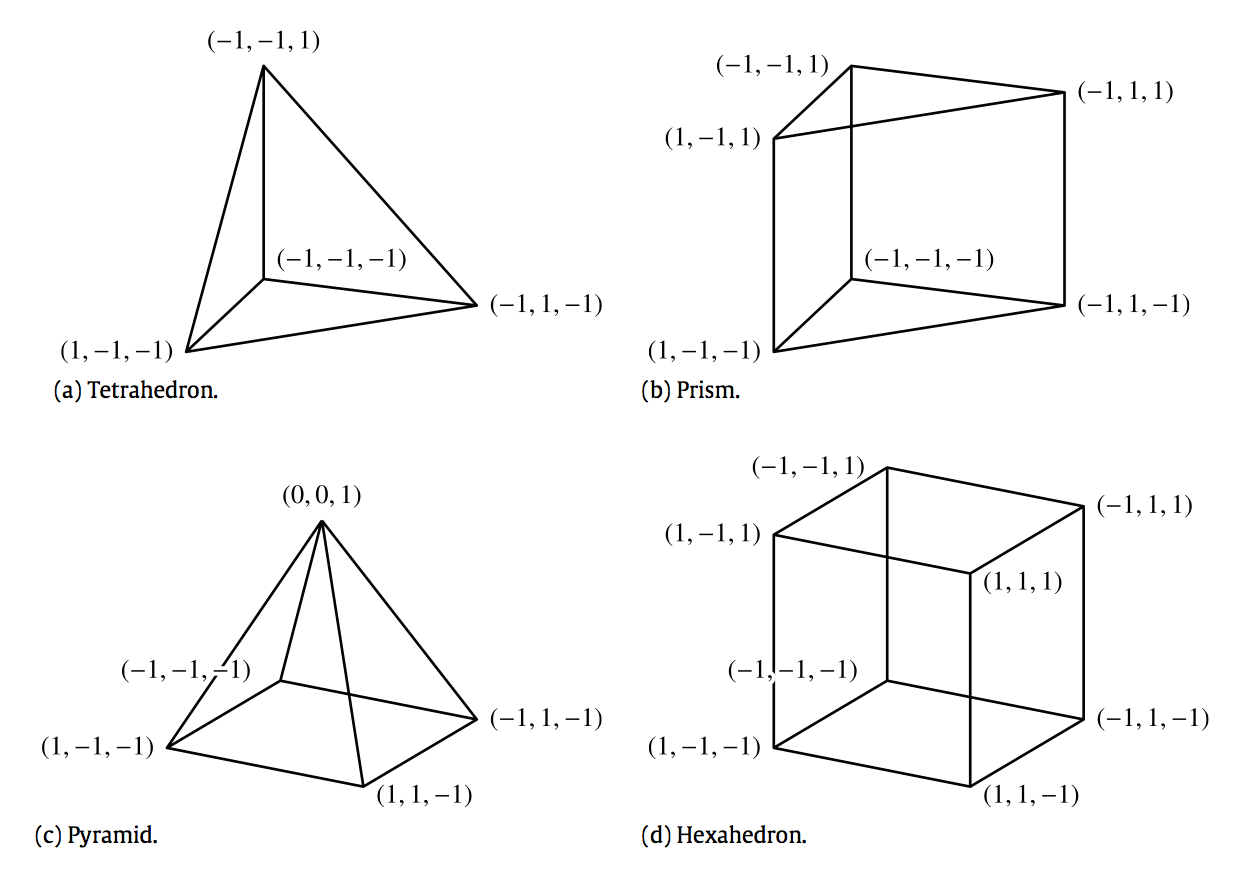
Abstract: PyFR is an open-source cross-platform computational fluid dynamics framework based on the high-order Flux Reconstruction approach, specifically designed for undertaking high-accuracy scale-resolving simulations in the vicinity of complex engineering geometries. Since the initial release of PyFR v0.1.0 in 2013, a range of new capabilities have been added to the framework, with a view to enabling industrial adoption. In this work, we provide details of these enhancements as released in PyFR v2.0.3, including improvements to cross-platform performance (new backends, extensions of the DSL, new matrix multiplication providers, improvements to the data layout, use of task graphs) and improvements to numerical stability (modal filtering, anti-aliasing, artificial viscosity, entropy filtering), as well as the addition of prismatic, tetrahedral and pyramid shaped elements, improved domain decomposition support for mixed element grids, improved handling of curved element meshes, the addition of an adaptive time-stepping capability, the addition of incompressible Euler and Navier-Stokes solvers, improvements to file formats and the development of a plugin architecture. We also explain efforts to grow an engaged developer and user community and provided a range of examples that show how our user base is applying PyFR to solve a wide range of fundamental, applied and industrial flow problems. Finally, we demonstrate the accuracy of PyFR v2.0.3 for a supersonic Taylor-Green vortex case, with shocks and turbulence, and provided latest performance and scaling results on up to 1024 AMD Instinct MI250X accelerators of Frontier at ORNL (each with two GCDs) and up to 2048 Nvidia GH200 GPUs of Alps at CSCS. We note that absolute performance of PyFR accounting for the totality of both hardware and software improvements has, conservatively, increased by almost 50x over the last decade.
Link:
Link:
Recent Seminars
PyFR: Taking Scale-Resolving Simulations from Academia to Industry. P. E. Vincent NASA Ames, Moffett Field, CA, USA, December 2024.
Aerodynamic Optimisation of Aerofoils for Martian Rotorcraft Using Direct Numerical Simulations. P. E. Vincent AIAA Journal Seminar Series, October 2024.
Openings
PhD Studentship in Aeronautics - High-Fidelity Simulation of Titan/Mars Entry Vehicles with PyFR
Summary: Next-generation Entry, Descent, and Landing (EDL) systems for Titan and Mars must safely slow down increasingly large payloads. One particular challenge occurs during the transonic phase of descent, where the spacecraft is subject to aerodynamic instabilities that can cause uncontrolled oscillations, posing a significant risk of mission failure. This project will further develop the GPU-accelerated computational fluid dynamics flow solver PyFR - implementing improved shock capturing approaches and a full 6-DOF free-flight capability - and use it to study dynamic stability in the transonic phase of descent. The work will be undertaken in collaboration with Texas A&M University and NASA Ames.
Advert:
Advert: